
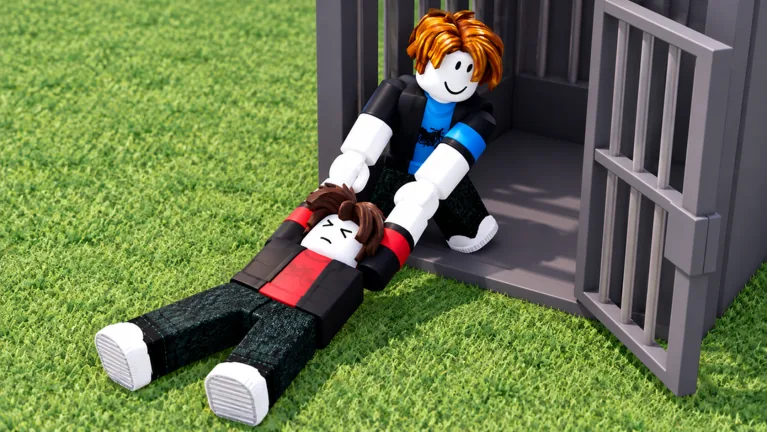
Assign the next job, not a permanent class
Useful team roles are the duties somebody covers right now: hunter, carrier, escort, defender and rescuer. They are informal coordination choices. You do not need a class-selection screen to decide who collects a downed opponent or who watches the jail.
Switch jobs as the situation changes. After a knockout, the hunter can carry and another player can escort. After delivery, one can defend while the other looks for the next supported fight. If allies are captured, somebody needs to arrange a rescue.
Cover the entire capture chain
A group of players chasing the same target can still leave essential work undone. Ask which stage currently has nobody responsible for it.
| Duty | Immediate job | Handoff to make |
|---|---|---|
| Hunter | Pressure an opponent near support | Tell an ally when pickup is available |
| Carrier | Collect and transport the downed opponent | Confirm delivery and recheck the jail |
| Escort | Watch pressure along the carrier’s route | Return to support or defense after delivery |
| Defender | Watch bars, repairs and approaching rescuers | Call when another section needs attention |
| Rescuer | Arrange outside pressure on an enemy cage | Cover freed allies leaving the jail |
These duties overlap. A defender can become an escort when a delivery reaches the entrance, and a hunter can abandon a poor chase to help repair. Use the table to agree who handles each task, and switch when your teammates need help.
Make a small group work
With two players, begin with a supported fight and divide pickup from protection as soon as the opponent goes down. At the jail, check whether defense needs both of you before leaving again. Do not keep both players hunting while prisoners attack unattended bars.
With three players, somebody can keep an eye on the base while the other two work a capture. Rotate that duty when pressure moves. If several allies are jailed, the group can switch to a coordinated rescue instead of preserving the same assignments.
Say what you are about to do: “I carry,” “watch the other wall,” or “help this bar.” Those calls name a task and location. They are easier to follow than blaming somebody for not helping after the capture already failed.
Rotate when the team state changes
Use the captured display and what you can actually see around both bases. If your jail has prisoners under escape pressure, repair and defense become useful. If your available team is shrinking, staying with support and arranging a rescue can matter more than another isolated chase.
If an ally is already doing a job, cover the gap beside them. Standing next to a carrier without watching opponents does not provide the same help as an escort. Standing at a secure wall while another section breaks does not cover the jail.
Before leaving a duty, make the handoff explicit. A defender who says they are joining the next fight gives someone else a chance to watch the cage. Silently walking away leaves the team acting on an old assumption.
Review a lost capture as a missed handoff
Ask where the chain broke. Was the knockout left uncollected? Was the carrier alone? Did the cage remain unattended after delivery? Did freed allies have no safe direction to leave?
Use the answer to assign the next job. Have someone take over the missing duty while the others keep doing the work that was already covered.
For the transport pair, see carrier escort. When too few teammates remain free, use outnumbered strategy to choose a reachable recovery task.
FAQ
Are hunter and defender official classes?
No. They are suggested duties for coordinating the capture-and-rescue loop, not selectable classes or exclusive ability sets.
Who should carry after a knockout?
The available player who can collect and reach jail with support. Agree quickly, then let another ally cover the route.
Should someone stay at the jail all round?
Respond to the pressure. A jail holding active prisoners needs monitoring; rotate the duty when teammates need help elsewhere.
Can I change roles during a round?
Yes. Change the duty as captures, rescues and incoming threats change. Tell your teammates before leaving work they assume you are covering.