
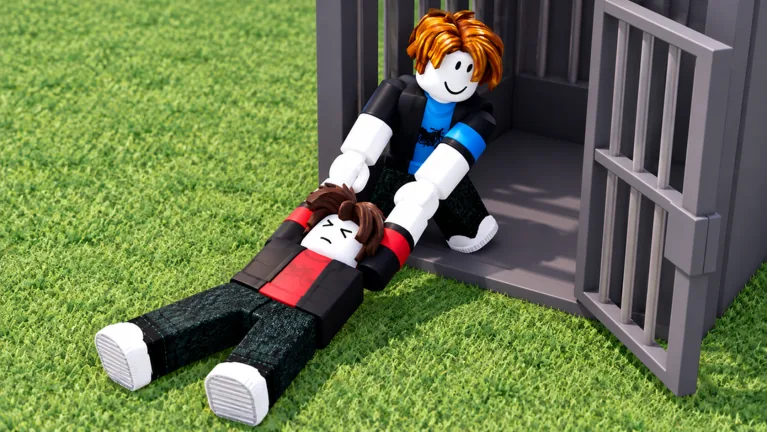
Open the cage with an exit in mind
To rescue jailed teammates, approach with support, help damage a bar section, and keep a route away from the enemy base available. Coordinate with the prisoners so they work on the section you are pressuring. Another ally can occupy defenders while you create the opening.
The rescue is not finished when the wall breaks. Your freed teammates still need space to leave. If everyone stops beside the cage to fight, the defending team can turn that crowded exit into another capture opportunity.
Check who can help before approaching
Look at your available teammates and the opponents around the jail. One ally distracting a defender can give a bar attacker a more useful opening than several rescuers independently chasing enemies in different directions.
Choose a meeting point near the approach, then agree who will attack the cage and who will watch defenders. You can change these assignments during the rescue. Take over at the cage if the teammate attacking it is forced away from the wall.
If you are alone and the cage is heavily defended, move back toward support. Wait for a reachable opening rather than repeatedly arriving on the same exposed route. Preserving one active teammate keeps another rescue attempt possible.
Connect outside pressure to the prisoners
Pick a bar section the prisoners can reach and see. Call out the target, then watch its health. Attack that section together so their hits from inside add to yours from outside.
| Outside situation | Useful adjustment |
|---|---|
| Prisoners are already weakening a section | Help that section if you can approach it |
| Defender repeatedly repairs your target | Coordinate a change of section |
| Ally occupies a defender away from the cage | Use the opening without abandoning the agreed exit |
| Several opponents close in | Regroup with support before being surrounded |
| Prisoners can get through | Cover their departure rather than starting another chase |
Do not assume every damaged wall is about to open. Read the health trend while the defending team repairs. If your pressure is being canceled, tell the prisoners before moving to another side so they do not continue alone on the old target.
Cover the first steps out of jail
When the opening becomes usable, watch the opponents nearest the exit. Freed players should move away from the cage toward friendly support. Create room for them to leave, and stay near the exit instead of following one enemy deep into their base.
Keep communication specific: identify the opening and the direction away from immediate pressure. “This side; move toward us” gives the prisoners a task they can act on.
After the escape, regroup and assess whether another teammate is still imprisoned. Do not automatically split into separate chases. Keep the freed players together so they can help with the next capture, escort or defense.
Fix the stage that failed
If you could not reach the wall, adjust the approach and add support. If the section kept recovering, coordinate damage and distract the repairer. If allies escaped and were immediately recaptured, improve exit coverage.
Find where the rescue stalled before trying another ability. A different ability may leave the same problem unresolved.
Prisoners can use the escape guide to coordinate their side of the cage. If a teammate is still being transported rather than already jailed, use carrier interception for an earlier intervention.
FAQ
Can outside teammates help break the jail?
Yes. Coordinate outside pressure with prisoners attacking the bars, and watch the health of the section you are targeting.
Should every rescuer attack the same defender?
Assign someone to pressure the cage while support watches defenders. If every rescuer leaves the bars, there is no opening for the prisoners.
What if opponents keep repairing?
Check whether bar health is making progress. Coordinate a switch to another accessible section and have support occupy the defenders.
What should I do once my teammates get out?
Cover their route away from the cage and regroup. Confirm whether anybody remains imprisoned before choosing the next task.